Center Certification & Testing International

basic introduction
Polymer batteries are also called lithium polymer batteries (Li-polymer), also known as polymer lithium batteries. It is also a kind of lithium ion battery, but it has many obvious advantages compared with liquid lithium battery (Li-ion), such as high energy density, more compact, ultra-thin, lightweight, and high safety. New batteries. In shape, the lithium polymer battery has ultra-thin characteristics, which can be made into batteries of any shape and capacity to meet the needs of various products. The minimum thickness of this type of battery can reach 0.5mm. Its nominal voltage, like Li-ion, is also a nominal voltage of 3.7V, with no memory effect.
National certification standards
Exporting country | Certification project | Testing standards | Applicable Products |
United States | UL | UL 2054 | Battery pack |
UL 1642 | Batteries | ||
UL 2271 | Battery pack / cell | ||
CTIA | IEEE 1725 | Battery pack | |
CTIA | IEEE 1725 | Batteries | |
IECEE | CB | IEC 62133:2012 | Battery pack / cell |
EU Germany | GS | EN 62133:2013 | Battery pack |
China | CQC | GB 31241-2014 | Battery pack / battery |
Korea | KC | KC 62133 | Battery pack / cell |
Japanese | PSE | JIS C 8712 | Battery pack / cell |
Taiwan | BSMI | CNS 15364 102 | Battery pack / cell |
India | BIS | IS 16046:2012 | Battery pack / cell |
Thailand | TISI | TIS 2214-2548 | Battery pack |
Air shipping | UN38.3 | ST/SG/AC.10/11/Rev. 5Section 38.3/Amend.2 | Battery pack / battery |
Electrochemical performance
1. Fast charging: Under the condition of ambient temperature 20±5℃, charge at a constant current of 200mA to 4.27, and then charge at a constant voltage of 4.20 until the current will stop at 4.3mA. ;
2. Rated capacity: Under the condition of ambient temperature of 205℃, the battery discharges at 86mA to 2.75V within 1 hour after fast charging. The capacity released is ≥200mAh;
3. Open circuit voltage: Measured within 24 hours after fast charging ≥4.1V;
4. Internal impedance: test with an internal resistance meter after fast charging ≤150m. ohm;
5. Cycle life: under the condition of ambient temperature 20±5℃, the last discharge capacity of fast charging and discharging 300 times with 200mA is ≥160mAh;
6. Low temperature performance: After fast charging, under the condition of -20±2C, the discharge capacity at 40mA is ≥160mAh;
7. High temperature performance: after fast charging, under the condition of 55±2℃, the discharge capacity with 200mA≥170mAh;
8. Discharge platform: Under the condition of ambient temperature 20±5℃, the cell discharges at 40mA to 2.75V within 1 hour after fast charging, and the discharged capacity is ≥140mAh;
9. Charge retention: after fast charging, store at 20±5℃ for 28 days, and then discharge at 40mA with a capacity ≥170mAh
Mechanical behavior
1. Constant damp heat performance
After the battery is fully charged, put it in a constant humidity and constant temperature box with a temperature of 40±2℃ and a relative humidity of 90-95% and leave it for 48 hours. Take out the battery and let it stand for 2 hours at a temperature of 20±5℃. Appearance of the battery, discharge time at 200mAh, no obvious bulge, corrosion, smoke, discharge time ≥ 36min
2. Vibration experiment
After fast charging, install the cell on the table of the vibrating table, and cyclically scan and vibrate from 10-55 Hz in the X, Y, and z directions at the following frequency and amplitude for 30 minutes at a scan rate of loct/min.
Vibration frequency: 10~30Hz, single amplitude 0.38mm;
Vibration frequency: 30~55Hz, single amplitude 0.19nmm;
It is required that there is no obvious damage, cracking, liquid leakage, etc. in appearance, and the cell voltage is ≥3.6V;
3. Collision experiment
After the cell is tested according to the provisions of 4.2, the cell is fixed on the table according to the three axial directions of x, Y and Z, and the experiment is performed according to the following requirements:
Pulse peak acceleration-100m/s2;
The number of collisions per minute is -40~80;
The pulse duration is -16ms;
The total number of collisions is -1000±10;
It is required that the appearance of the battery cell has no obvious damage, cracking, liquid leakage and other phenomena, and the battery cell voltage is ≥3.6V;
4. Free fall
After fast charging, drop it freely at a height of 1m onto a hard board of 18-20mm thick placed on the concrete floor. After falling once in the X, Y, and Z directions, perform a charge and discharge cycle, and record the discharge time at 200mA.
It is required that there is no obvious damage, cracking, liquid leakage, etc. in appearance, and the discharge time is ≥51min
Safety performance
The battery is quickly charged and placed in a hot box after being left for 2h, and the temperature is raised to 130±2°C at a rate of (5±2C)/min and kept warm for 30min;
Requirements: No fire, no explosion
1. Overcharge
After fast charging the battery and leaving it for 24h, the battery is charged with a constant current of 600mA until the voltage of the battery reaches 5V, and the current of the battery will be approximately 10℃ lower than the peak temperature after the current reaches zero.
Requirements: No fire, no explosion
2. Nail experiment
After the battery core is quickly charged, a steel nail with a diameter of 3 to 5 mm is used to penetrate the battery core from the largest surface of the battery core. The battery core does not catch fire and does not explode.
3. Heavy impact
After fast charging and leaving the battery for 24h, use a 10kg heavy hammer to freely fall from a height of 1m, and impact the battery fixed in the fixture. The battery will not catch fire and will not explode.
4. Short circuit experiment
After fast charging the battery and leaving it for 24h, short-circuit its positive and negative poles to the temperature of the battery about 10℃ lower than the peak value;
It is required that the battery core does not catch fire or explode, and the outer surface temperature does not exceed 150℃.
Our advantage
1. With a professional qualification and experienced expert technical team, we can provide you with professional consultation and services.
2. Have advanced laboratory equipment to ensure the accuracy and reliability of test data.
3. As a third-party testing and certification organization trusted by customers worldwide, we are your certificate of quality.

Label printers entering the Brazilian market, ANATEL certification is an essential passport! It is the recognition of the Brazilian Telecommunications Authority for the safety and compliance of electronic products, without which products cannot be legally sold.
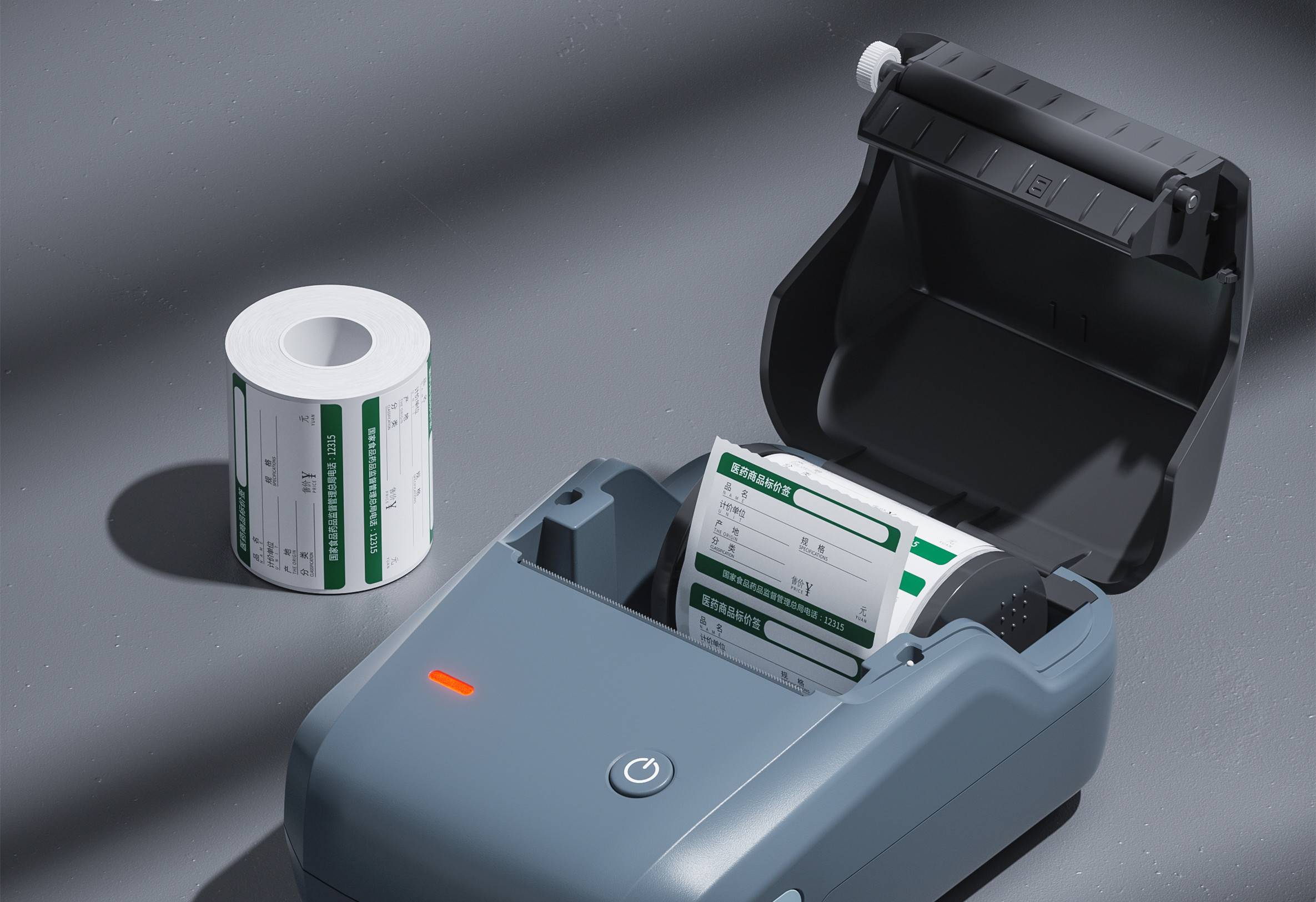
SRRC certification is not only a guarantee of product compliance, but also a key to opening up the market.
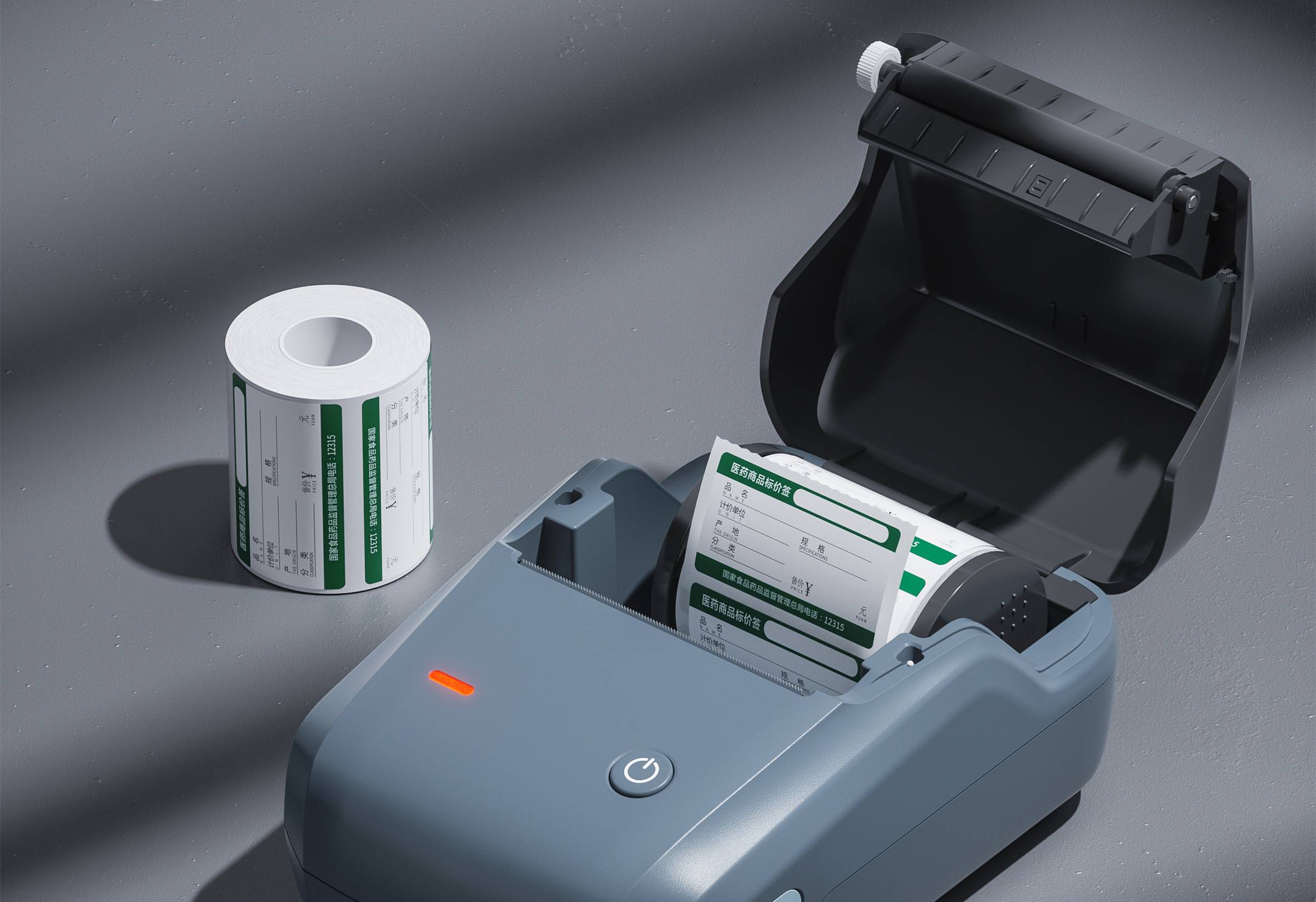
FCC ID certification is a mandatory certification for electronic products by the Federal Communications Commission (FCC) in the United States, and it is essential for label printers to obtain this certification.
Polymer batteries are also called lithium polymer batteries (Li-polymer), also known as polymer lithium batteries. It is also a kind of lithium ion battery, but it has many obvious advantages compared with liquid lithium battery (Li-ion), such as high energy density, more compact, ultra-thin, lightweight, and high safety.
Get a quote

Tik Tok